Daily Technology • September 1, 2026 • 6 min read
WaiterAid Alternatives for Restaurants
An objective comparison of WaiterAid and broader restaurant technology alternatives, covering booking, BokaBord, CRM, AI, integrations, ownership, and migration.
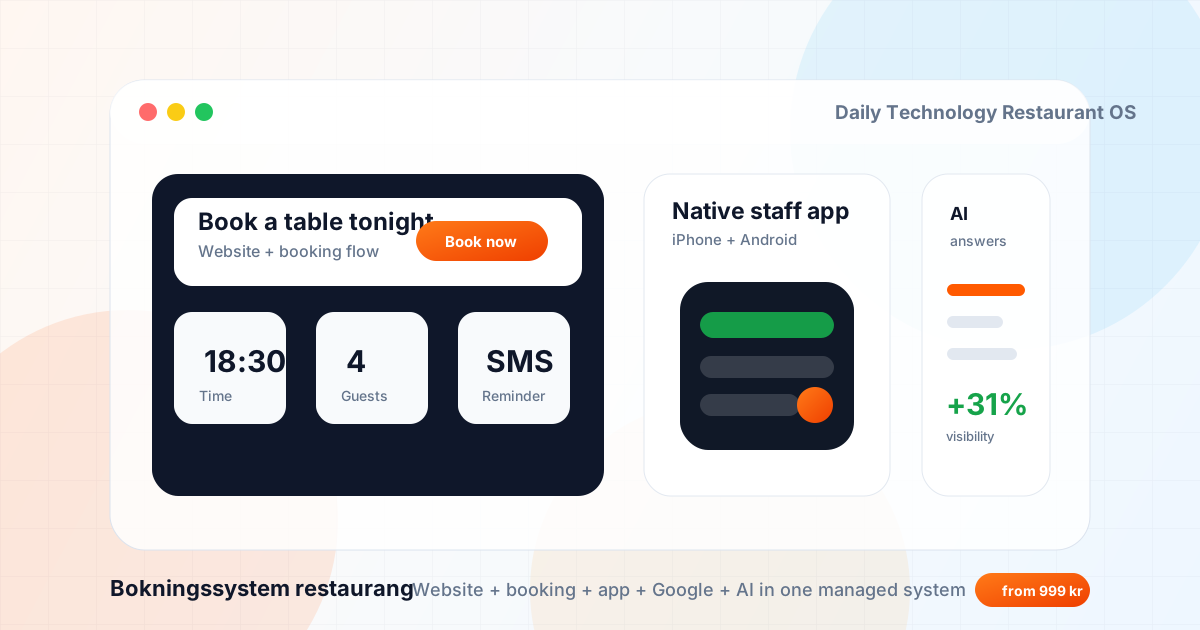
Last reviewed: 1 September 2026. This guide is for restaurant owners who are evaluating WaiterAid, considering an alternative, or deciding whether a dedicated booking platform is enough. It is an independent comparison based on publicly available product information. Daily Technology is not affiliated with WaiterAid or BokaBord.
Short answer: WaiterAid is a credible choice when the priority is a mature restaurant reservation system, table planning, a familiar booking flow, BokaBord visibility, and round-the-clock support. An alternative becomes more relevant when the restaurant wants its website, booking flow, CRM, AI customer service, local visibility, automation, and business-specific integrations managed as one connected setup.
What is WaiterAid?
WaiterAid is a Swedish restaurant booking platform developed with restaurants since 2003. Its current public offering includes online reservations, table and seating management, waiting lists, guest records and CRM, prepayments, booking guarantees, a staff app, BokaBord visibility, integrations, and WaiterAI.
WaiterAI answers telephone calls and email enquiries, checks availability against the restaurant's booking rules, and places eligible bookings directly into WaiterAid. The company also states that more than 1,300 restaurants use the system and that customer support is available 24/7.
Verify the current product details directly on the official WaiterAid booking-system page, WaiterAI page, and BokaBord overview.
When WaiterAid is likely the better fit
WaiterAid deserves serious consideration when the restaurant primarily needs a proven reservation and table-management product rather than a broader digital rebuild.
- You want a booking flow already familiar to many Swedish restaurant guests.
- You need detailed table planning, seating rules, waiting lists, guest notes, and reservation operations.
- BokaBord discovery and a bookable restaurant profile are important acquisition channels.
- You value an established restaurant specialist with 24/7 support.
- Your website, SEO, CRM strategy, and surrounding systems are already working well.
- One of WaiterAid's documented POS, staffing, payment, or analytics integrations fits your existing stack.
In those situations, replacing a mature specialist simply to reduce the number of suppliers may add unnecessary migration risk.
When an alternative may fit better
The question changes when the booking calendar is only one part of the problem. A broader alternative may be more suitable when the restaurant needs to rebuild the complete path from discovery to repeat visit.
- The current website is slow, difficult to update, or disconnected from booking and analytics.
- Guest enquiries arrive through calls, email, forms, social channels, and events but do not enter one follow-up workflow.
- The restaurant wants greater control over its own website, landing pages, local SEO content, and conversion tracking.
- CRM, review requests, missed-call handling, private-event leads, and marketing automation need to work together.
- Existing integrations are too rigid for the restaurant's operational model.
- The business wants one accountable implementation partner rather than separate website, booking, automation, and support suppliers.
WaiterAid vs Daily Technology
This is not a feature-count contest. The two offerings begin from different starting points: WaiterAid is an established restaurant booking specialist, while Daily Technology builds and manages a wider connected business setup.
| Evaluation area | WaiterAid | Daily Technology |
|---|---|---|
| Core approach | Established reservation, table-management, and guest platform for restaurants. | Managed website, booking, CRM, AI, automation, visibility, and integration setup shaped around the business. |
| Restaurant discovery | BokaBord profile, search visibility, and booking distribution. | Restaurant-owned website, local search structure, content, Google pathways, and direct conversion flows. |
| AI | WaiterAI handles calls and email enquiries and can place bookings into WaiterAid. | AI customer-service and automation workflows designed around the restaurant's selected channels and hand-off rules. |
| Operations | Mature table planning, waiting list, guest records, app, and reservation workflow. | Connected workflows across booking, leads, CRM, staff processes, reporting, and other business systems. |
| Integrations | Published integrations with selected POS, staffing, payment, and analytics providers. | Business-specific integration work where the required systems and APIs make it feasible. |
| Best fit | Restaurants that primarily want a proven specialist booking platform and BokaBord ecosystem. | Restaurants that need a broader managed digital foundation or a custom connection between several systems. |
Capabilities, packages, and integrations change. Confirm current details with each supplier before making a decision, especially where an integration is essential to daily service.
Questions to ask before choosing
- Where do bookings come from today? Separate direct bookings, marketplace bookings, telephone calls, email, social messages, and private-event enquiries.
- Which workflows must remain uninterrupted? Map table rules, future bookings, deposits, guest notes, gift cards, confirmations, and staff access.
- Who owns each customer touchpoint? Understand the website, domain, content, guest data, analytics, integrations, and account access.
- What is the total operating cost? Include the website, booking platform, marketplace, CRM, AI, messaging, support, content, and integration maintenance.
- What happens when something fails during service? Compare support hours, escalation routes, monitoring, and recovery procedures.
How to change booking systems without losing bookings
A system change should be treated as an operational migration, not a simple widget replacement.
- Document active bookings, future events, deposits, table rules, user roles, templates, and integrations.
- Confirm what data can be exported and which fields can be imported into the new system.
- Build and test the new booking flow before changing the public booking links.
- Run a controlled overlap period where staff can verify that new and existing reservations remain visible.
- Update the website, Google Business Profile, social profiles, email templates, QR codes, and campaign links together.
- Keep an agreed rollback plan until the new workflow has passed live-service testing.
Some restaurants do not need a full replacement. Integration can be the lower-risk option when the reservation workflow is strong but the website, automation, or lead handling needs improvement.
Our recommendation
Choose WaiterAid when a mature specialist reservation system and BokaBord visibility solve the main problem. Consider Daily Technology when the booking system must be part of a wider, managed infrastructure covering website, direct acquisition, CRM, AI customer service, automation, and custom connections.
Start with the restaurant booking-system checklist, review the broader supplier comparison, or explore our booking-system service. To evaluate replacement versus integration for your restaurant, request a no-commitment system review.
Frequently asked questions
Is Daily Technology affiliated with WaiterAid?
No. Daily Technology is not affiliated with WaiterAid or BokaBord. This comparison uses public product information and links to the official sources so readers can verify current claims.
Is WaiterAid a good booking system?
It can be a strong fit for restaurants that prioritise established reservation operations, table planning, BokaBord visibility, a staff app, and 24/7 support. The right choice depends on the restaurant's surrounding website, CRM, AI, and integration needs.
Can Daily Technology integrate with an existing booking system?
Potentially. Integration depends on the existing platform's API, export options, permissions, and the required workflow. A technical review should come before any promise to integrate or replace a live booking system.